




Why Panic Attacks Keep Happening
Why Panic Attacks Keep Happening
One of the most frightening parts of anxiety is not the first panic attack. It is the second, third, or fiftieth. It is the moment you start asking yourself why panic attacks keep happening when you have already tried to calm down, breathe properly, think positively, avoid stress, and do everything you were told should help.
If that is where you are, this is not a sign that you are broken, weak, or beyond help. It usually means your brain and nervous system have learned a pattern of danger, and that pattern is still running in the background. Until that pattern changes, panic can keep showing up even when part of you knows you are safe
Why panic attacks keep happening even when nothing seems wrong
Many people assume panic attacks must be caused by a current problem. They look for the obvious trigger - work pressure, lack of sleep, family stress, caffeine, hormones, a crowded train, driving on the motorway. Those things can matter. But they are often not the full reason.
Panic attacks keep repeating because the brain starts treating certain sensations, places, thoughts, or situations as threats. Once that happens, your nervous system does not wait for real danger. It reacts to perceived danger.
That is why panic can seem to come from nowhere. Your conscious mind may not see a threat, but your survival system has already detected something familiar - a racing heart, dizziness, a closed space, being too far from home, a memory, a feeling of being trapped, or even the fear of panic itself.
This is also why people can have panic while sitting on the sofa, walking round the supermarket, or trying to fall asleep. The body is responding to a threat signal, not necessarily to an actual emergency.
The hidden cycle that keeps panic alive
Panic becomes persistent because it is self-reinforcing. You notice a sensation. Your brain interprets it as dangerous. Your body releases more adrenaline. The symptoms intensify. Then your mind says, “See? Som
ething is wrong.”
That loop can happen in seconds.
After a while, it is not only the original symptom that scares you. It is the whole experience. You start fearing the racing heart, the heat, the shaking, the unreality, the nausea, the tunnel vision. You begin scanning your body more closely, watching for signs that another attack might be coming.
That hypervigilance makes perfect sense when you have been through repeated panic. But it also keeps your system on alert. The more alert you are, the more sensations you notice. The more sensations you notice, the more likely your brain is to sound the alarm again.
This is one of the main reasons panic can feel relentless. You are not choosing it. Your system is caught in a learned survival loop.
Fear of the symptoms becomes a trigger
At the start, a panic attack may have been linked to a stressful event or a difficult period. Later, the attack itself becomes the thing your brain wants to prevent.
So you start managing life around it. You sit near exits. You avoid queues. You stop driving far. You carry water, medication, or safety items everywhere. You cancel plans unless you know you can leave quickly.
These behaviours are understandable, and they often come from desperation rather than choice. But they can accidentally teach the brain that panic really was dangerous and that you only stayed safe because of the escape plan.
That is how the cycle gets stronger.
Why coping tools can help but not fully stop it
This is where many people feel disheartened. They have done breathing exercises, meditation, journalling, talking therapy, affirmations, supplements, and all the usual advice. Some of it helps in the moment. Some of it takes the edge off. Yet the panic keeps returning.
That does not mean those tools are useless. It means they may be managing the symptoms without changing the deeper brain-body pattern driving them.
If your nervous system still believes panic is protecting you, it will keep producing it. You can get very good at coping and still feel trapped by the next attack.
This is the difference between temporary relief and lasting change. Relief matters, especially when you are overwhelmed. But if you want panic to stop happening so often, the root fear pattern has to shift.
Why panic attacks keep happening after trauma or prolonged stress
For some people, panic does not begin out of the blue. It grows after trauma, burnout, grief, illness, chronic stress, or a long period of living in survival mode.
When your system has been overloaded for months or years, it can become sensitised. That means the threshold for alarm gets lower. Small changes in body sensation or environment can trigger a much bigger fear response than they once would have.
This is especially common if you have been pushing through for a long time. From the outside, you may have looked capable. Inside, your system may have been carrying far more than it could process.
In those cases, panic is not random. It is often the nervous system saying, in the only language it knows, “I do not feel safe.”
That safety issue is not always logical. It can be stored in patterns, associations, and protective responses that sit below conscious thought. That is why people often say, “I know I am safe, but my body does not believe me.”
The problem is not that you are failing
When panic keeps happening, many people turn on themselves. They think they are doing recovery wrong. They wonder why other people can go shopping, drive, fly, work, or sit in a meeting without feeling as if they are about to collapse.
Please hear this clearly: recurring panic is not a character flaw. It is not attention-seeking. It is not weakness. It is a conditioned response.
Conditioned responses can change, but they usually do not change through force, shame, or endless self-monitoring. They change when the brain and body experience enough safety, in the right way, to stop firing the old alarm.
That is why trying harder often makes things worse. The more urgently you fight the panic, the more your system reads the experience as dangerous. The more dangerous it seems, the more likely the cycle is to repeat.
What actually needs to change
If you want to understand why panic attacks keep happening, the answer is usually not that you need more willpower. It is that your brain has linked certain internal and external cues with threat, and your nervous system is reacting accordingly.
Real progress tends to come when you stop focusing only on managing episodes and start changing the underlying pattern that creates them.
That may involve addressing stored fear, reducing nervous system sensitisation, and helping the brain update the meaning it has attached to panic symptoms. It also means building genuine internal safety rather than relying only on avoidance or reassurance.
This is why a deeper, brain-based approach can feel different from methods that only teach you how to cope in the moment. Coping asks, “How do I get through this attack?” Root-cause work asks, “Why is my system creating this attack in the first place, and how do we help it stop?”
That distinction matters.
For many people, the turning point comes when they realise they do not need to spend the rest of their lives managing anxiety more skilfully. They need a process that helps the fear circuit switch off at its source. That is the kind of work Wahida Finlay has become known for, especially for people who are exhausted by short-term fixes and want to feel safe in their bodies again.
When the pattern starts to break
As the underlying fear response changes, several things usually happen. The body becomes less reactive. Symptoms feel less convincing. The urge to scan, avoid, or escape begins to ease. Situations that once felt impossible start to feel manageable again.
This rarely happens because someone finally found the perfect sentence to tell themselves during a panic attack. It happens because the alarm system is no longer firing with the same intensity and frequency.
That is when people often say they feel free for the first time in years. They can drive without planning every exit. They can go into shops without monitoring their heart. They can book a trip, go to work, or look after their children without living in constant anticipation of the next wave.
If panic has become a regular part of your life, there is a reason for that. And if there is a reason, there can also be a solution. You do not need to keep making your world smaller in order to feel safe. With the right support, your system can learn that safety is possible again.

Feeling stuck, heavy, or emotionally drained?
It’s time for a Mind Detox — a powerful therapy experience designed to clear emotional clutter and bring real calm back into your life.
This pre-recorded full therapy session (1 hr 18 mins) has already helped thousands of people release anxiety, panic, grief, anger, guilt, and more — often after just one listen.
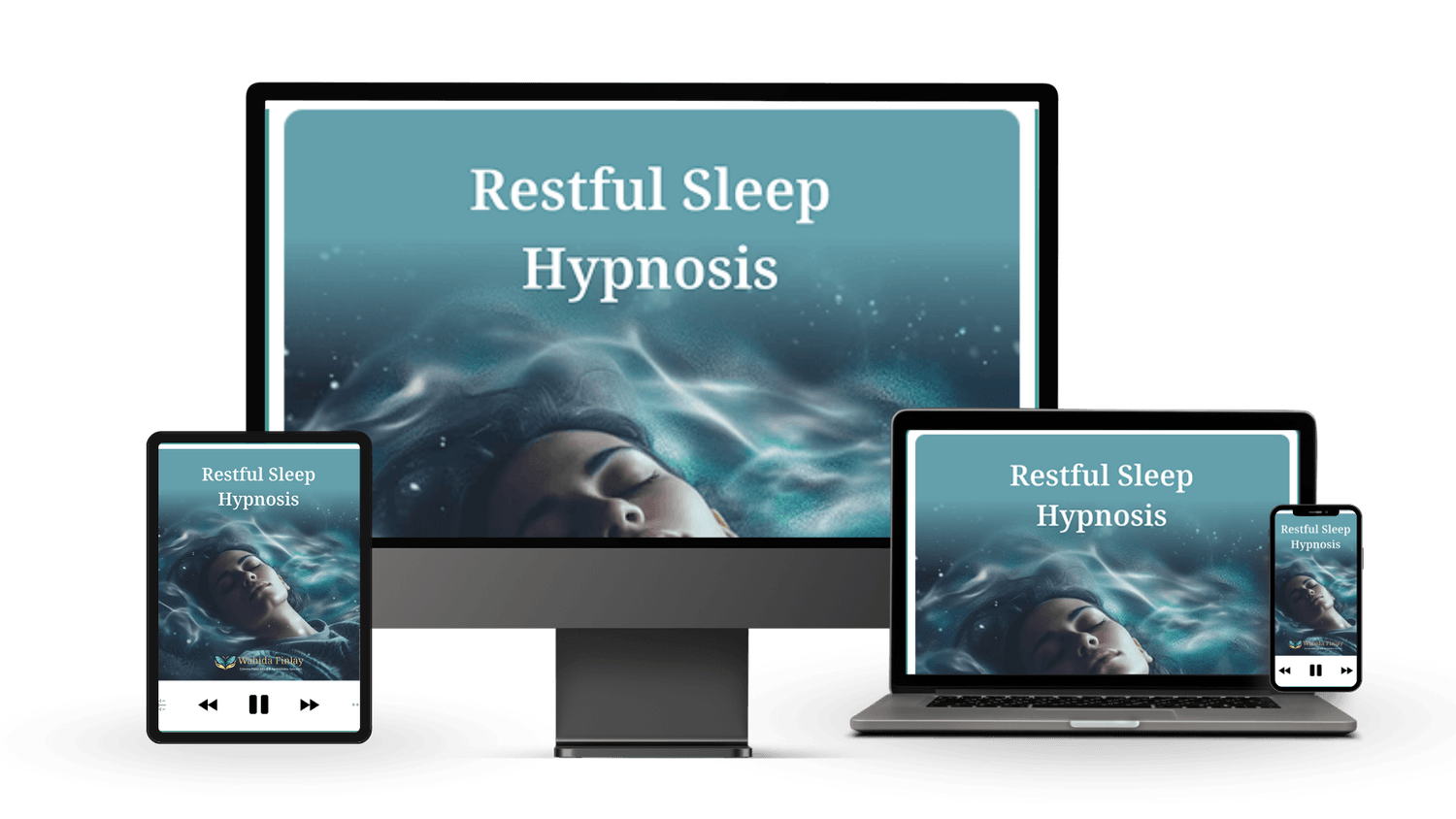
Sleep Meditation Audio Length of Suggestions 30 mins and background binaural isochronic tones for restful sleep runs for a full hour.
Restful Sleep Hypnosis Audio
Struggling with sleep disturbances? Difficulty falling asleep or staying asleep? Let our Restful Sleep Hypnosis Audio be your guide to a rejuvenating night's rest. Created by Wahida, a seasoned expert in hypnotherapy, this audio track is designed to quieten a busy mind and promote deep, restful sleep.
About Author

I’m Wahida Finlay, an Extreme Panic Attack & Agoraphobia Specialist and creator of the Gamma Brain Reset Method. For over 14+ years, I’ve helped 2000+ people overcome anxiety, panic, and trauma by retraining their brains to feel calm and safe again. Here, I share practical insights, tools, and science-backed methods to help you live with more peace and confidence, from the inside out.
If you’re new here, start with my Free Gamma Brain Reset Training, a simple, science-backed way to retrain your brain in 90 days without coping tools or medication.
Copyright © Wahida Finlay 2026. All Rights Reserved
For support, email me at hello@wahidafinlay.com
